Industrialization and Economic Development
Key Concepts
Industrialization is the rapid and massive growth of industry in a particular area. Industrialization began to grow in Brazil in the early 1900s, and things such as iron mills, textile manufacturing, and food processing became more common. This was due to the economic crisis that occurred in the 30s, which prompted Brazil to find a new source of income.
Growth and Diffusion of Industrialization
The Changing Roles of Energy and Technology
Brazil has a relatively high usage of renewable resources. In 2004, 42% of the country's used energy came from renewable sources. This high usage and production rate has also made Brazil the world leader in sugar cane and ethanol production. Technological advances have helped substantially to decrease the cost to grow and produce the products. Wood is also a high export product, and after planning, looks to be something relatively sustainable.
The Industrial Revolution
Brazil was not very much affected by the Industrial Revolution, primarily because the country was so focused on agriculture. This meant that industry did not become important to the country until the 1900s, where they were spurred to try it to help their country's economy.
Evolution of Economic Cores and Peripheries
Brazil's economy has changed dramatically since the beginning of the 20th century. While at one time the country exported a few products in small amounts, industry has completely reversed this. Exports of common goods are high, and it has lead Brazil to become one of the largest economies in the world.
Contemporary Patterns and Impacts of Industrialization and Development
Variation in Levels of Development
From the late 1940s to the early 1960s, Brazil experienced a large amount of growth in industry. It then slowed until the late 1980s, when the diversity of products began to expand. Brazil's economy has always been reliant on crops and crude oil, and while those products are still important today, many other goods have been introduced. Telecommunications are becoming a big part of the economy, as well as the automotive and aircraft production.
Deindustrialization and Economic Restructuring
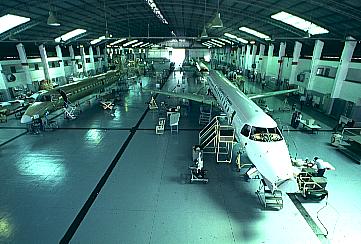
In 1964, the Brazilian government began to change the infrastructure of the country, and find more options for manufacturing because crops and oil could not sustain as high a level of growth as it had been experiencing. This has continued up until today, when aircraft production is actually the highest valued industry in Brazil.
Pollution, Health, and Quality of Life
Pollution in Brazil is ever-growing, but steps have been taken to make sure that it does not get out of hand. Regulations on industries and automotives have been passed, and others are in progress. The severeness of the pollution varies widely on what area you are in. While small, northern cities may have nearly completely fresh air, southern areas like Sao Paulo can be consumed in smog. Healthcare in Brazil has gotten substantially better within recent years, but the country's injury mortality rate remains high due to large levels of crime in the country. Obesity levels are also increasing, presumably from the growing middle class. Overall, Brazil's quality of life can be quite subjective, depending on how much money you have, and where you live. While the lifestyle is a welcoming and warm one, the large amounts of poverty and the constant threat of crime is definitely a problem.
Industrialization, Environmental Change, and Sustainability
With all of the recent attention to the environment's well being, especially the Amazon Rain Forest, it is possible that Brazil will be able to preserve their surroundings for quite a long time to come. While the country sits at a point now where it could go either way, there is a good chance that they will continue what they are doing, and that the environment will maintain its healthy state.
Local Development Initiatives: Government Policies
Brazil has relied on out of country investments and large corporations to grow their economy. While there are many small farms in Brazil, they are not very profitable and serve little more purpose than employing citizens. Small businesses do not thrive well in a country overrun with large businesses.
 |  Photo Source: telcojobsbloggers.com |
Cities and Urban Land Use
Definitions of Urbanism and Urbanization
Urbanism:
1. The characteristic way of life of city dwellers
2. a. The study of the physical needs of an urban societies
b. City planning
Urbanization:
1. The quality or state of being urbanized or the process of becoming urbanized
The Origin and Evolution of Cities
Historical Patterns of Urbanization
Between 1880 and 1950, immigration rates in Brazil were high, particularly from western Europe and Russia. Europeans came in search of work in the coffee business, which was easy to get, since slavery was abolished in 1888. Then, between 1950 and 1970, nearly 20 million people moved to the interior cities of Brazil from rural areas, and by the 1991, about 75% of the population was located within large cities. The population also changed dramatically during the 80s, when emigration to wealthier countries pushed many Brazilians out of the country. Immigration from neighboring countries also began to occur, creating a more diverse country.
Rural-Urban Migration and Urban Growth
Urbanization from inter-country migration is something that occurred within Brazil for the majority of the 20th century, for various reasons. Between 1950 and 1970, about 20 million people came from rural areas to live in the city, particularly Sao Paulo and Rio de Janeiro, because city living was more prosperous for the poor. Now, immigration is usually by those who are looking are financially better off, and are looking for economic opportunities.
Global Cities and Megacities
Brazil has 22 cities with over 1 million people in the city and the metropolitan area. Sao Paulo and Rio de Janeiro alone have a combined population of nearly 32 million people, and it is possible that they will become one entire megacity in the future if immigration continues. If the next 20 city's populations are added up, they only make up about 40 million people. Almost all of the cities are located in the south, and have become the economic center of the country.
Functional Character of Contemporary Cities
Changing Employment Mix
In Brazil, race plays a part in who will be employed. This makes it difficult for those with dark skin to get a job, even if they are qualified. This perpetuates a system of uneven pay and thus an income gap between races. Steps are now being taken, however, to make sure that all races have available ways to educate themselves. Universities set aside a certain percentage of admissions to assure that black students have a chance to be educated. With this, it is possible that race will become less of a factor when employers assess potential workers. Women are also now becoming more accepted in the work place as well.
Changing Demographic and Social Structures
2010 was the first year that over half of the Brazilian population identified themselves as either black or mixed race. This shows that racial prejudice is decreasing somewhat within the country. However, pay for whites is, on average, about twice as much.
Built Environment and Social Space
Transportation and Infrastructure
Transportation in Brazil is very inefficient. Most of the population travels by road, and the roads of Brazil are ill-kept and often falling apart. Trains have very limited destinations, and even with the abundance of waterways, transportation that utilizes it is rarely used (with the exception of those who live in the Amazon rain forest). Cargo is also transported very poorly, mostly on roads in trucks.
Political Organization of Urban Areas
With the many political parties that are recognized in Brazil, each one tends to apply to a specific group of people. For instance, Rio de Janeiro residents tend to vote for those in the Popular Party, while those in Sao Paulo usually vote for those in the Workers' Party. Other parties have difficulty targeting those areas, and often are not successful if they try.
Urban Planning and Design
In a few cities, urban planning has been successful. This is usually in the larger, but not giant, cities. Examples of good planning tactics include creating parks in areas prone to flooding, advocating recycling, and positioning development so that pollution will not be blown by winds into the center of the city. The city of Curitiba has done a particularly good job of this, and has become popular with its excellent planning. But other cities in Brazil, like Sao Paulo, have done a very poor job at making sure that the city is planned well. This has caused an extremely cramped and polluted city.
Uneven Development, Ghettoization, and Gentrification
Brazil's development has been incredibly uneven, to the point where the country's government has created incentives for moving to less inhabited areas. Southern Brazil is practically one giant urban area, while northern Brazil's population is much smaller and more spread out. Ghettoization has become a huge problem in larger cities, the ghetto being called a favela. There, it is common to see people sleeping in the streets, guns are commonly seen, and it is rare to see police. Gentrification has only become popular recently due to the 2016 Rio Olympics. With so much potential tourism, the city has begun to clean up some of the less beautiful parts of the cities that visitors might see.
Impacts of Suburbanization and Edge Cities
Suburbanization is definately common in Brazil, but recently it has become a problem in separating social classes. Some suburban areas are simply favelas, and some are composed soley of the rich. These gated communities are populated only by those with large amounts of money, and they obviously don't allow for others to enter. Social classes are already a part of Brazilian culture, and these communities do nothing to help.
Source: http://www.merriam-webster.com/dictionary/urbanism
